Astrophotography: Choosing the right equipment
Discover astrophotography and capture the beauty of the night sky
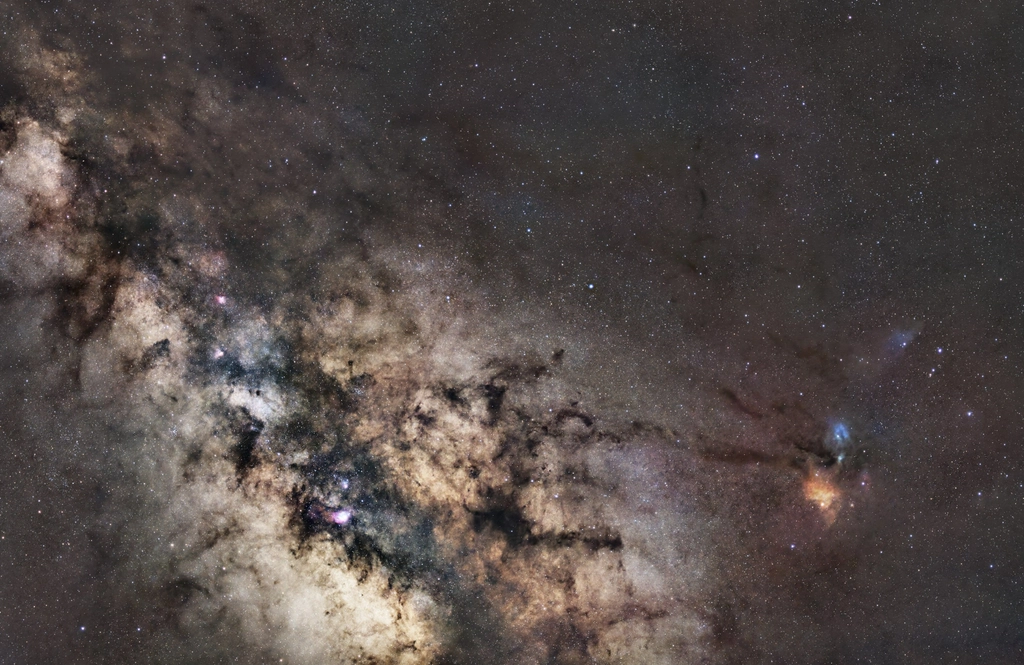
Astrophotography is an exciting discipline that immortalizes stars, planets, the Milky Way, nebulae and galaxies. Thanks to the progress of digital cameras, telescopes and motorized frames, it is now possible to achieve spectacular images even as a beginner.
In this guide, we help you choose the best astrophotography equipment according to your budget and objectives. You will discover the recommended equipment, the essential accessories as well as our practical tips to succeed your first deep sky photos.
Why invest in specialized equipment?
The specialized astrophotography equipment offers better image quality, more accurate tracking and more possibilities for evolution. Whether you want to photograph the Moon, planets or deep skies, the right equipment will allow you to achieve much better results than with a simple camera on a tripod.
Camera
A DSLR or hybrid camera with a good sensor is ideal for photographing the stars and the Milky Way. Models offering excellent digital noise management with high ISO sensitivity are particularly sought after by astrophotographers.
Telescope or astronomical telescope
For deep sky imaging, an apochromatic refractor is often a great choice to start with. Newton telescopes offer excellent value for money to capture nebulae and galaxies.
Motorized equatorial mount
The mount is often considered as the most important element in astrophotography. A motorized equatorial mount compensates for the rotation of the Earth and allows long exposures without star trails.
Automatic steering system
When you want to improve the quality of deep sky images, a self-guiding system can correct tracking errors of the mount and obtain more detailed shots.
How to take successful photos of the Milky Way?
Photographing the Milky Way requires a dark sky, little light pollution, and a bright lens. Here are some tips:
- Use a stable tripod.
- Photograph on a moonless night.
- Set your camera between ISO 1600 and ISO 6400.
- Use an aperture between f/1.4 and f/2.8.
- Manually focus on the stars.
With a little practice, you can capture impressive images of our galaxy.