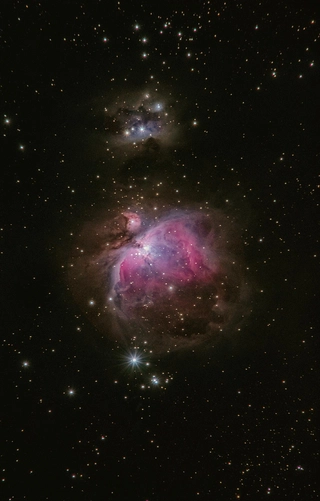
Observation of the position of the Sun in real time
Visualize in real time the position of the Sun in the sky.
The Sun: A giant star
The Sun is a star located at the center of the solar system, it exerts a force of gravity that keeps the planets in their orbits. The Sun is also our main source of light and heat, without which life on Earth would not be possible.
Our interactive sky map allows you to observe the position of the Sun and its movement in the sky in real time, depending on the date, time and your location.
Sunrise and sunset
The Sun seems to move from east to west in the sky throughout the day. It usually rises from the east side, reaches its maximum height around mid-day, then gradually descends towards the horizon before setting to the west.
This apparent trajectory varies according to the time of year and the observer's latitude. In summer, the Sun generally follows a higher and longer trajectory in the sky than in winter.
Sky map
We reproduce the sky with the 8 planets of the solar system, the Moon, the Sun and the milky way.
We accurately calculate and display their apparent positions in the sky in real time, taking into account:
- local sidereal time of the selected observation location,
- celestial coordinates of the stars, proper motion, precession, nutation, and aberration of light,
- date and hour.
The celestial vault is delimited to reveal which celestial objects are currently visible in the sky.
The compass tells you which direction you are looking, you can select another city to observe the sky from its position.
Use the buttons to travel through time and observe how celestial objects move in the sky as the earth rotates.
Sun data
| Sun | Diameter | Weight | Average temperature | Current Equatorial Position | Current Horizontal Position at Marseille |
|---|---|---|---|---|---|
| Sun The Sun is the star at the center of the solar system, source of light, heat and gravity for all the planets in orbit. | 1 392 684 km | 1,9885x10^30 kg | 5500 °C | Right ascension : 13ʰ52ᵐ13.2121081429ˢ Declination : -11°31′27.748857616″ | Azimut : 32.99677191040691° Altitude : 29.103810079488625° |
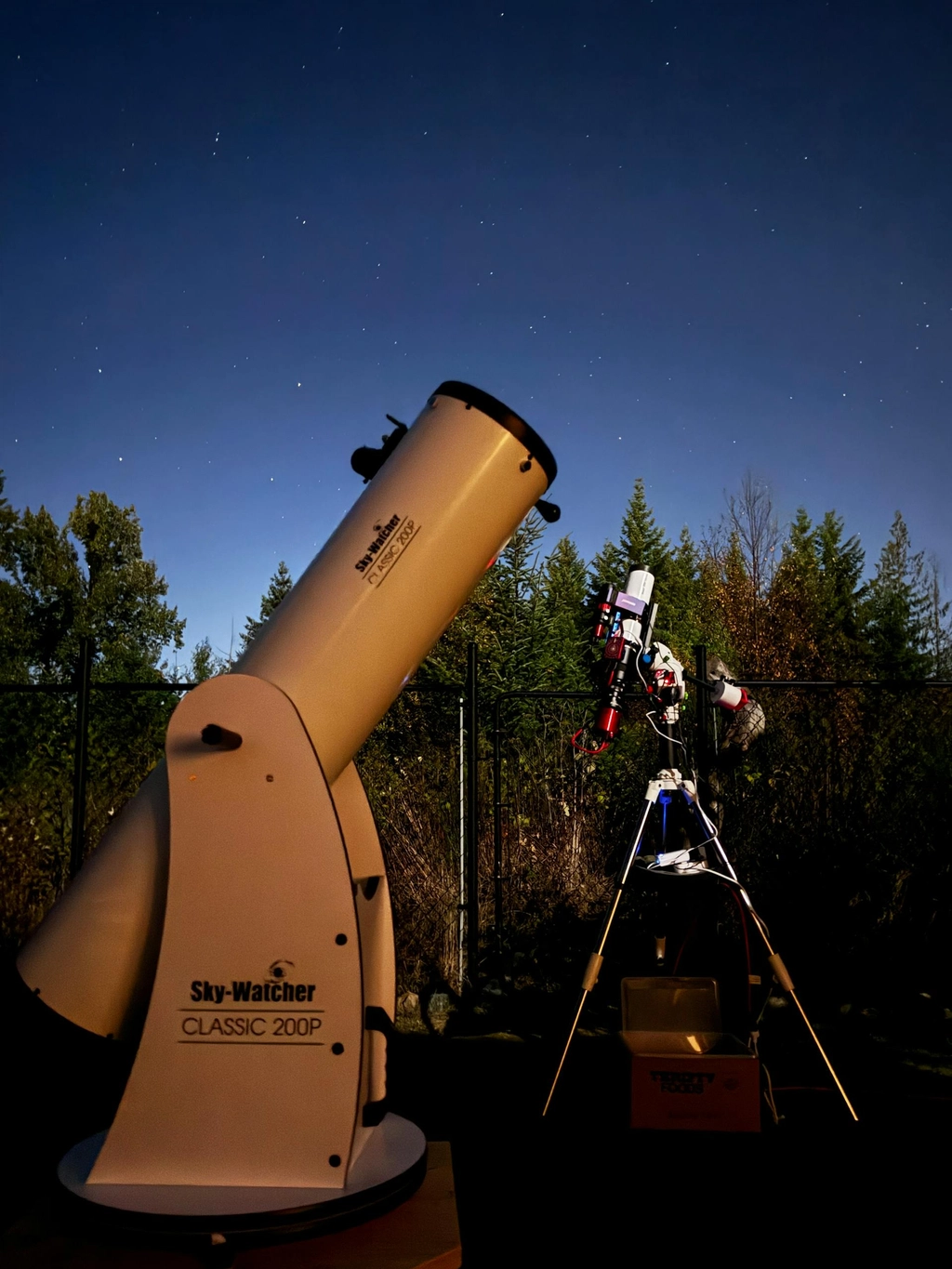
Observation equipment
Observing the night sky is a fascinating experience that allows discovering planets, stars, galaxies and nebulae visible from Earth.
To take full advantage of these observations, it is important to have the right astronomy equipment.
Deep sky
The deep sky is a set of celestial objects located outside the solar system.
It includes galaxies, nebulae, star clusters and quasars.
These objects are very far from the Earth and often low in brightness.